Beef Noodle and Beef Kway Teow are both noodles with beef parts (beef slices, tendons, tripe, meatballs). But beef kway teow is usually associated with Teochew while beef noodle is more Hainanese. Of course this is not the only difference but a beefy soup enhanced with gula Melaka (palm sugar) and galangal (lengkwas) is Teochew and gooey gravy thickend with starch is Hainanese. The Hainanese style is popularly known as dry version but there are Teochew style dry version which is more like kway teow tossed with oil and chilli sauce topped with beef parts (this type is quite a rare find). Beef noodle that is synonymous with Hainanese-style in Malaysia is Seremban Beef Noodle (city 70km south of Kuala Lumpur). There's one stall in Singapore that serves this Seremban Beef Noodle at Marine Parade Central. The noodle is usually thicker and chewy, the gravy is starchy of course but I cannot pin-point the dramatical difference here in the gravy with the local Hainanese version (pic below, local Hainanese Beef Noodle at Hai Nan Xin Zhou). Anyhow, it is very curious for a non-Singaporean like myself, why soup is Teochew and gravy is Hainanese... and which came first? Through my web search though, I now learn that Shantou is famous for beef noodles. I've also had some awesome beef noodle while in Taipei. Of course you also have pho in Vietnam and similar ones in Thailand. Knowing that Teochew people migrated to these countries, it isn't so off the wall to mention that, if it weren't for the Teochew people, there may not be beef soup noodle/kway teow in these countries.
Humble Japanese, trying to de-mystify Singapore cuisine and food culture. This is not a restaurant / stall rating blog.
11.12.2012
Seremban Beef Noodle 芙蓉牛腩粉・牛肉粉
Beef Noodle and Beef Kway Teow are both noodles with beef parts (beef slices, tendons, tripe, meatballs). But beef kway teow is usually associated with Teochew while beef noodle is more Hainanese. Of course this is not the only difference but a beefy soup enhanced with gula Melaka (palm sugar) and galangal (lengkwas) is Teochew and gooey gravy thickend with starch is Hainanese. The Hainanese style is popularly known as dry version but there are Teochew style dry version which is more like kway teow tossed with oil and chilli sauce topped with beef parts (this type is quite a rare find). Beef noodle that is synonymous with Hainanese-style in Malaysia is Seremban Beef Noodle (city 70km south of Kuala Lumpur). There's one stall in Singapore that serves this Seremban Beef Noodle at Marine Parade Central. The noodle is usually thicker and chewy, the gravy is starchy of course but I cannot pin-point the dramatical difference here in the gravy with the local Hainanese version (pic below, local Hainanese Beef Noodle at Hai Nan Xin Zhou). Anyhow, it is very curious for a non-Singaporean like myself, why soup is Teochew and gravy is Hainanese... and which came first? Through my web search though, I now learn that Shantou is famous for beef noodles. I've also had some awesome beef noodle while in Taipei. Of course you also have pho in Vietnam and similar ones in Thailand. Knowing that Teochew people migrated to these countries, it isn't so off the wall to mention that, if it weren't for the Teochew people, there may not be beef soup noodle/kway teow in these countries.
11.01.2012
Beef Ball Bee Hoon 客家牛肉丸米麺
客家のヌードル、ビーフボールヌードルは、あまりめったにその辺にある料理ではないので今回紹介しよう。ボヨンボヨンと弾力のあるシンプルなビーフヌードルに、あっさりとしたスープ。ビーフンが入った、あっさりとしたヌードル料理だ。ミートボール以外には揚げねぎとセロリ菜だけだ。付け合わせは、酸味の効いたチリソース。これにビーフボールをつけて食べる。このお店はリトルインディアエリアにある、Syed Alwi Rd. Gar Lok Eating Houseにあるその名もThe Beef House. 朝食にもってこいだ。ここには、ビーフボールの他に、牛筋ボールもある。
客家・Hakka系のチャイニーズは、シンガポールチャイニーズでは、大体、10%程をしめている。ちなみに、チャイニーズ系シンガポリアンの人口は、全体の74%。
5.29.2012
What's Cookin in Our Kitchen: Mee Rebus ミーレブス
Mee Rebus, a Malay noodle dish consisting of blanched Hokkien noodles, tau kua (fried firm tofu), green chili, boiled egg and bean sprouts (sprinkled with fried shallots and garnished with a lime wedge). The rich gravy is thickened with mashed sweet potato (simple potato will do as well) and ground peanuts. The most memorable mee rebus is the one I had at Johor Bahru in the middle of nowhere, a restaurant called Restoran ZZ (pic below). It was like a cross between mee rebus and sup tulang (bone marrow soup)! The straw in the middle is of course for devouring the bone marrow. So when I had this, I thought of revamping the mee rebus with a good beef stock and use tender wagyu beef. The result was fantastic!
11.10.2011
Instant Noodle: Chilli Crab Noodle & Mee Siam シンガポールの即席麺その1

Instant noodle was invented by a guy called Momofuku Ando in 1958 in Japan. The first instant noodle was named "Chicken Ramen" But this instant noodle was not the cup-ready-to-go noodle but a packaged one where you put the noodle in a bowl and pour hot water. Through advanced research and trial and error, the incredible mega-hit cup noodle was out to public May 1971. The price back then was 100yen when a price of packaged instant noodle was 25 yen. You can still buy it for less than 150yen after 40 years! I often do not eat instant noodles in Singapore because I cannot waste my appetite on something like fast food or instant food but I bought some at the airport and flew it back with me. First one up is Nissin's (a company that made instant noodle) Chilli Crab flavored Cup Noodle. It comes with a spicy chilli packet which tastes more or less like nam prick pow -the ubiquitous Thai condiment. The rest is like a regular cup noodle with freeze dried surimi stick. This is made in Singapore but it does not taste anything like chilli crab. What were the R&D people at Nissin thinking? Next one up is Myojo (another Japanese instant noodle company) mee siam. How would you describe the flavor of mee siam sold at food centres? There's that similar flavor be it Nonya version, Malay version or Indian version -slightly tart, sweet and spicy and the hae bi or dried shrimp giving that richness and complexity. None of those in this instant one. It also came with the same flavoring nam prick pow like the chilli crab flavored cup noodle. It also contains freeze dried cabbage and green onion, I believe. I just don't know how anyone could sell this as a mee siam. But do not get me wrong here. The taste is not that bad but I just am concerned about the naming of the product.

NISSINの次はまたもやカップ麺の大御所である明星。こちらは、シンガポールで製造のミーシアムを食してみた。蓋を開けると粉末状のスープパックとサンバルのような生のパックが入っている。このサンバルのようなものはチリクラブヌードル同様、タイのナンプリックパオ(チリジャム)の味にそっくりといっていい。そして熱湯をかける事、3分、出来上がり。ちなみにイメージ写真とはまったく見かけが違うので、日本だとクレームになると思う。具はフリーズドライのネギとキャベツのような野菜。味は決して不味くないのだが、ミーシアムとは全く味も規格も違うので、どう判断していいのか困ってしまう。せめてフリーズドライのニラが入っていれば…しかし、ニラ、エビ、ゆで卵、厚揚げなど、ミーシアムに必要なトッピングをのせても、ミーシアムではない味だ。結論:ホーカーセンターで1杯、SG$2でそこそこ美味い麺が食べれるので、$1−$2するカップ即席麺はよほどの事がないかぎり、日本人のように頻繁に食べないのではないだろうか?恐らく、日本のように少し高級なカップ麺$4−5を作る事は可能だが、そうなったらだれも購入しないと考える。断然、ホーカーセンターの方が安くて美味い。
8.02.2011
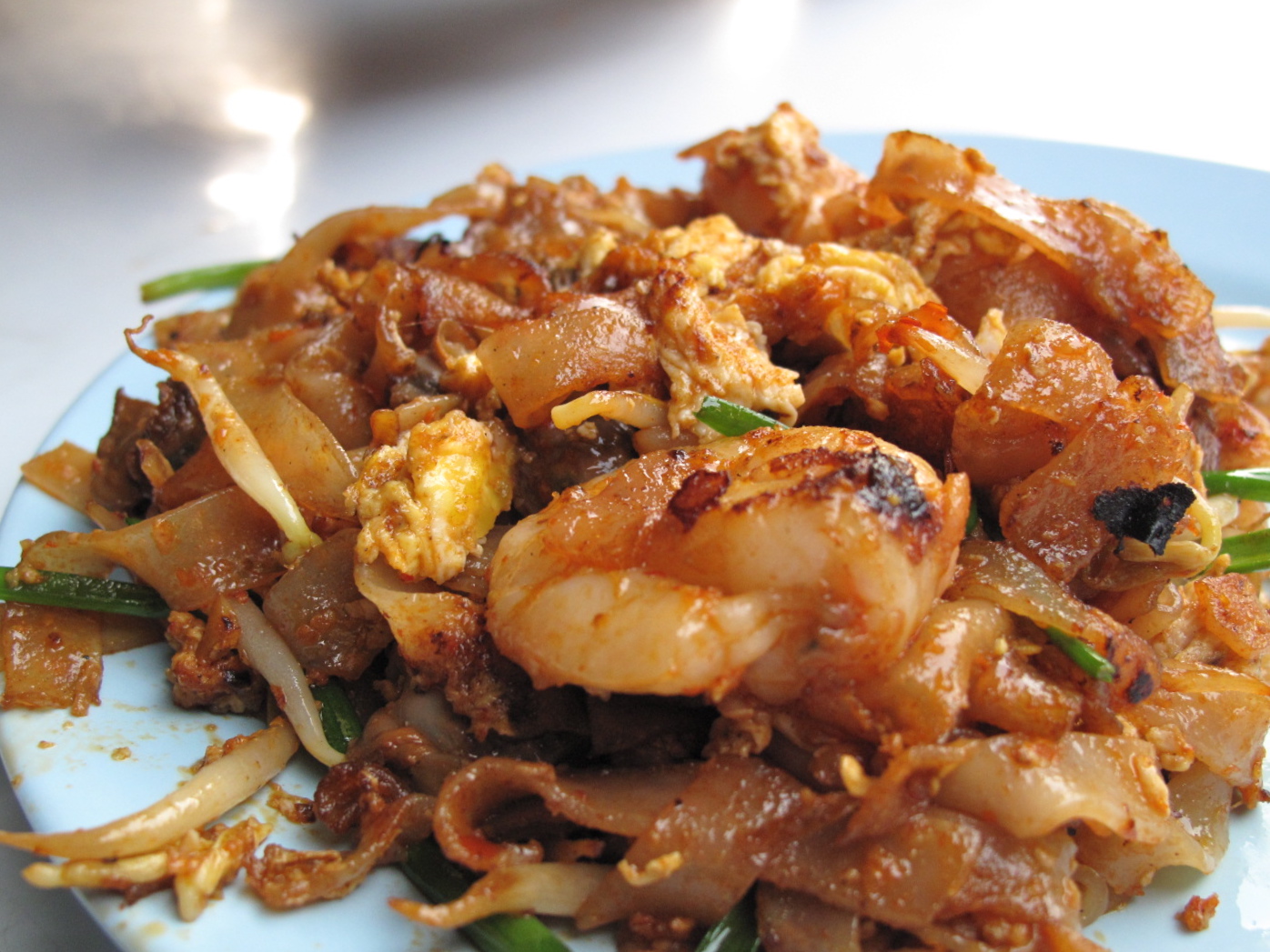
Char Kway Teow チャークエイティオウ Singapore & Penang 炒粿條
6.20.2011
Ban Mian Ban Mee 板面 バンミー バンミアン
2.24.2011
Study in Mee Siam ミーシアム
私も、チキンライスのように何十件というお店をミーシアムでは回っていないので、そこまで詳しく説明はできない。ただ、どのスタイルにも共通するのは、その甘酸っぱいソースにサンバルチリでほんのり辛くし、ビーフンと一緒にスプーンとフォークで食すところ。決して箸ではない。その為、ビーフンはあまり長くなく、スプーンで食べやすく事前に切ってあるのだ(カトンラクサみたいだが、カトンラクサの場合はレンゲで食べる)。ちなみに上の写真はノニャ風のミーシアム(最初のマレー風と具材は一緒だ)。ソースは主に、香味野菜・チリサンバル・タオチオ(味噌)・ナンプラ・砂糖。
こちらは、たまたまJB(ジョホールバール)でかなり旨いチェンドルを食べた時にお店で売っていたミーシアム。さて、あのグレービードロドロのミーシアムが何故、バナナの葉に包めるのか?と思う。そう、JBのミーシアムは焼ビーフンなのだ。別名ミーシアム・ケリン(Mee Siam Kering)とも言われている。Keringはマレー語でドライという意味だ。下はマラッカで食べたミーシアムだが、JBのようにドライだ。大きな違いは、サンバルチリがグレービーのようなところだ。さて、ペナンのものはシンガポールのミーシアムに近いのだ(リサーチしたところ)。なので、やはり、ミーシアムはペナンの影響なのか?9.12.2010
Hainanese Beef Noodle (Dry Version) 牛肉粉干
I am aware that there are two types of beef noodle in Singapore -the gooey Hainanese version and the soupy Teochew version. I hereby introduce the Hainanese version. A thick rice vermicelli smothered with sweet aromatic gravy (flavored from hints of star anise, cinnamon, cloves) thickened with some sort of starch topped with slowly braised shin, tendon, tripe, brisket as well as bouncy beef balls and flash heated beef slices. The accompaniment of chilli paste, cincalok and lime juice gives the dish another dimension, namely the dish is, in my opinion, incomplete without it -complicated flavors and saltiness from fermented shrimp (cincalok), lime juice complements the slightly sweet gravy and richness of the beefy goodness and the chilli gives the needed kick here and there.
8.31.2010
Fish Head BeeHoon 魚頭米粉
Not many nations are crazy for fish heads like Singapore -Fish head curry, fish head steamboat and then there's fish head beehoon. Fish head beehoon, I was told, is uniquely Singaporean dish which is Cantonese but not sold in mainland China. The chopped up fish heads are fried in oil until crisp and aromatic then simmered together with sweet fish & chicken based stock. The garnish depends from stall to stall but is not elaborate as -say beef noodles. Some stalls I recall serve with only greens with a dash of deep fried shallots. It is simple and bold dish. Some add XO Brandy to the soup for complexity. But this could be a marketing tool. I am extremely skeptical whether they use the REAL XO Brandy (meaning Extra Old) which is cognac aged in cask for at least 6 years. Some add milk to the soup and some don't. It is often said that adding milk is cheating (in order to achieve the milky colour) but flavor of the soup gets an extra kick and sweetness so I don't really find it cheating. But the science behind milky colour is just like Japanese tonkotsu (pork soup) ramen. You need some fat, liquid and an emulsifier. In this case, the fat is the deep fried bones, the liquid -the stock, and the emulsifier is the collagen from the bones that's melted away by boiling for quite some time. The oil and liquid usually don't mix with one another but with the addition of emulsifier agent, they will be mixed definitely or indefinitely depending on what it is. Good example is mayonnaise (and hence the solid color achieved by mixing vinegar and oil with the help of egg yolk). The noodle for fish head beehoon is not the thin type of beehoon but a thicker one known as chor beehoon like the one used for laksa. I haven't come across a stall that sells this with other type of noodles (then it won't be fish head beehoon but fish head noodle). But is chor beehoon the very best match with the soup? Some say that the reason why they do not use the thin type of beehoon is that they suck up the soup. Then why not use mee sua? Ah, my friend told me this is also not a good idea :-)
Lot of stalls use the fresh water fish such as Toman fish -game fish and a lot of them are farm raised in Malaysia. I found a shop at Chinatown complex that specializes in toman fish. They were quite huge -around 70cm. They also look kind of vicious.
登録:
投稿 (Atom)